


DURUM MILLING TECHNOLOGY
DURUM MILLING TECHNOLOGY
Durum wheat is a highly significant crop in the Mediterranean region; however, its uses vary greatly. For instance, while it is almost exclusively utilized in the preparation of pasta products in European countries, it is equally employed in the Middle East and North Africa for bread-making processes, as well as for pasta, couscous, bulgur, and various other applications. To accommodate these diverse uses, durum wheat must possess distinct technological characteristics and undergo a range of transformation processes.
CONTACT US
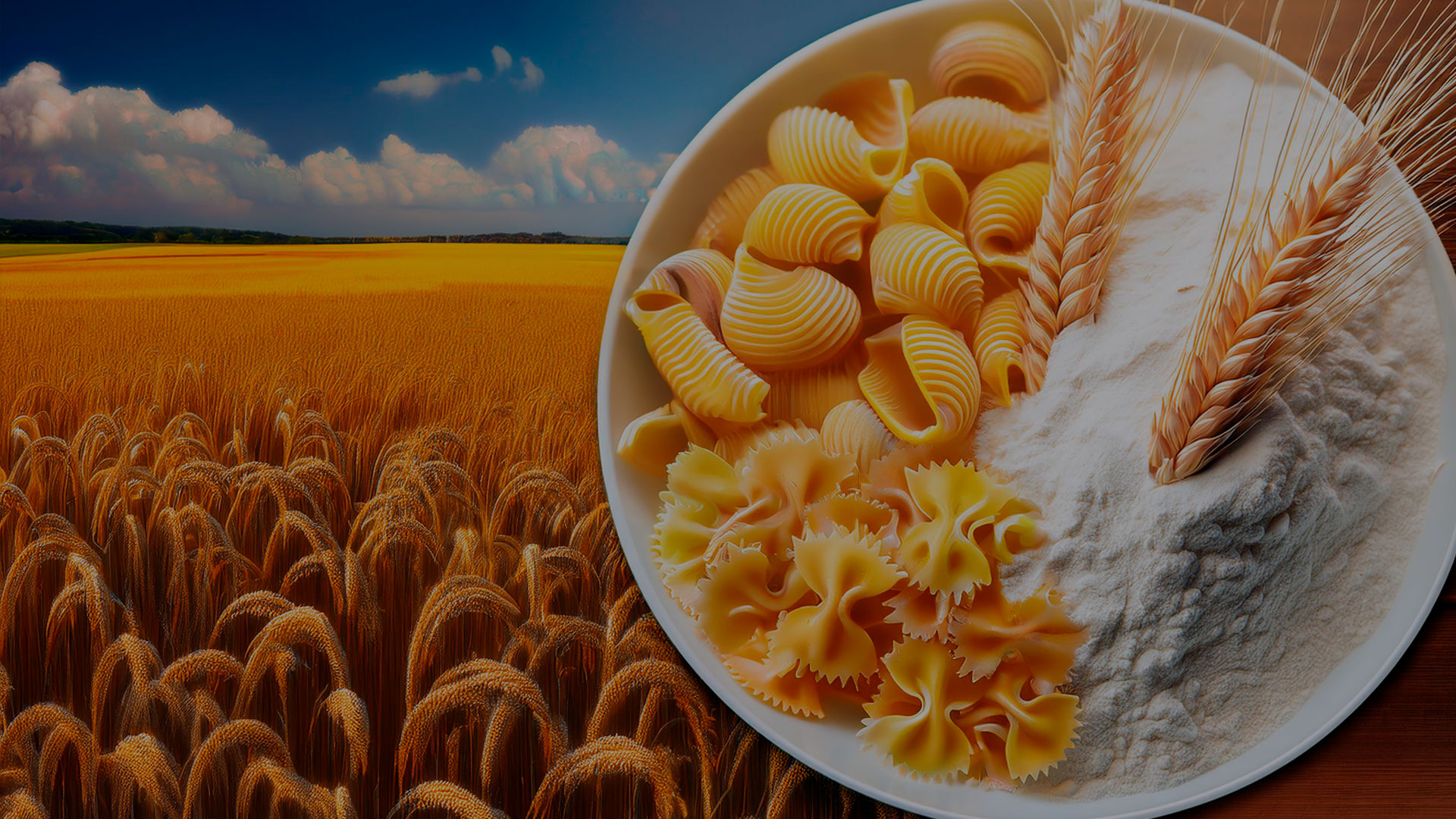
Objective of milling and technological quality of durum wheat
The commercial milling of durum wheat serves two primary objectives:
- a) achieving the highest possible milling yield;
- b) meeting the needs and requirements of customers;
Consequently, ideal durum wheat should possess excellent technological qualities and produce sufficient semolina upon milling. While customers require semolina with specific characteristics for various applications—such as pasta, couscous, bread, and bulgur products—there are certain fundamental or technological traits that the wheat itself must consistently exhibit. Additionally, some technological properties of semolina may be influenced by the milling process. The combined attributes of the wheat and semolina define the “technological quality of durum wheat and semolina,” which are also referred to as “durum wheat milling value” and “pasta value,” respectively.
The milling value of durum wheat is determined by the quantity of semolina extracted with desirable technological properties. This yield can be influenced by several factors:
- a) The moisture content of the grain must be kept as low as possible.
- b) Impurities and foreign seeds have a detrimental impact on yield.
- c) Due to the elongated shape, hard texture, and low moisture of durum wheat kernels, they are prone to breakage during harvesting, making it difficult to recover broken kernels during the cleaning process.
- d) Small grains are unsuitable for milling because of their low endosperm-to-bran ratio.
- e) All grains must have uniform size.
- f) Sprouted grains can result in pasta with poor cooking qualities.
- g) The hard texture of durum wheat is a genetic trait linked to the firmness of the endosperm and the strong bonds between starch and protein. The absence of a protein called 15K protein on the surface of starch granules may contribute to its harder texture. As the endosperm fragments more readily between starch granules during milling, the semolina must meet industrial demands by achieving a particle size of 300–400 μm.

Our
Brand Names









CONTACT US, WE ARE HAPPY TO HELP YOU…