


CORN MILLING TECHNOLOGY
CORN MILLING TECHNOLOGY
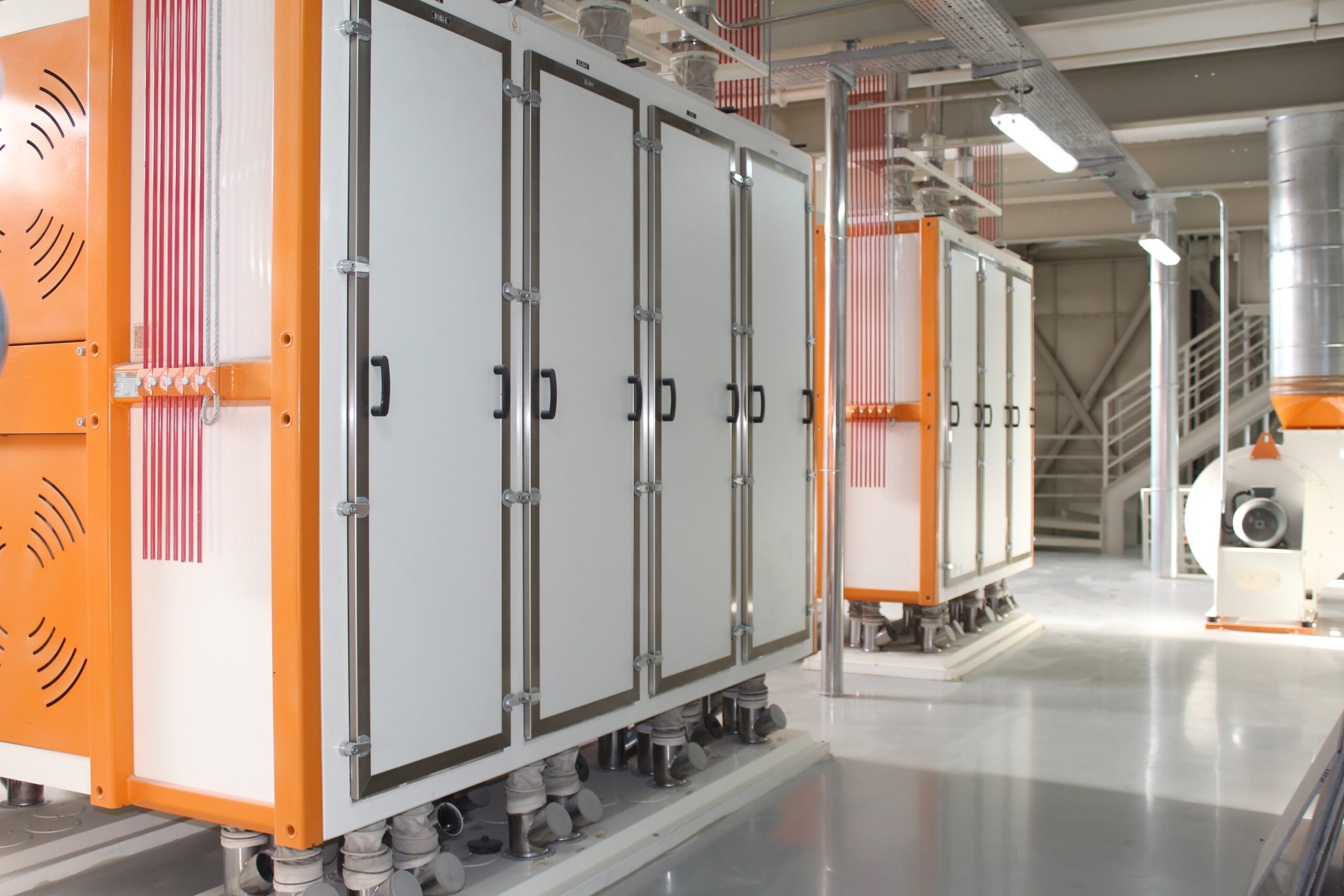
The modern industry has demanded more advanced equipment for various stages of the industrial process, such as control, cleaning, degermination, milling, and others. Each step plays a vital role in the overall process.
Re-cleaning the grain facilitates better storage conditions for corn, while weighing with electronic scales tracks the movement of corn mass and its derivatives. Cleaning ensures purer corn, enabling better conditions for the degermination process.
During the degermination stage, the separation of the endosperm from other parts of the corn—pericarp, germ, and tip—is a critical process. This stage is considered the heart of the mill and allows for optimization of subsequent steps. Moreover, at this point, the fat content of products derived from the endosperm can be reduced.
CONTACT US
Between degermination and milling, several different products can be obtained from the endosperm, such as:
Hominy: Used for puffed products, as well as sweet or savory recipes.
Broken hominy: Suitable for flakes and sweet or savory dishes.
Coarse grits: For fine flakes, extrusion, and other applications.
Medium grits: For fine flakes, extrusion, and other uses.
Fine grits: For fine flakes, extrusion, and similar purposes.
Coarse and fine flour: Used for cookies, cakes, bread, and more.
Cream flour: Applied in pasta, biscuits, cakes, bread, and other products.
The application of these products can be further diversified through various processes within the milling operation, such as flotation. Additional techniques, including gelatinization, nixtamalization, and pre-cooking, are also available.
The most critical consideration is the proper execution of degermination and the establishment of an efficient milling diagram tailored to the desired product or products. Industrial efficiency in corn processing hinges on this foundation.
Our
Brand Names









CONTACT US, WE ARE HAPPY TO HELP YOU…